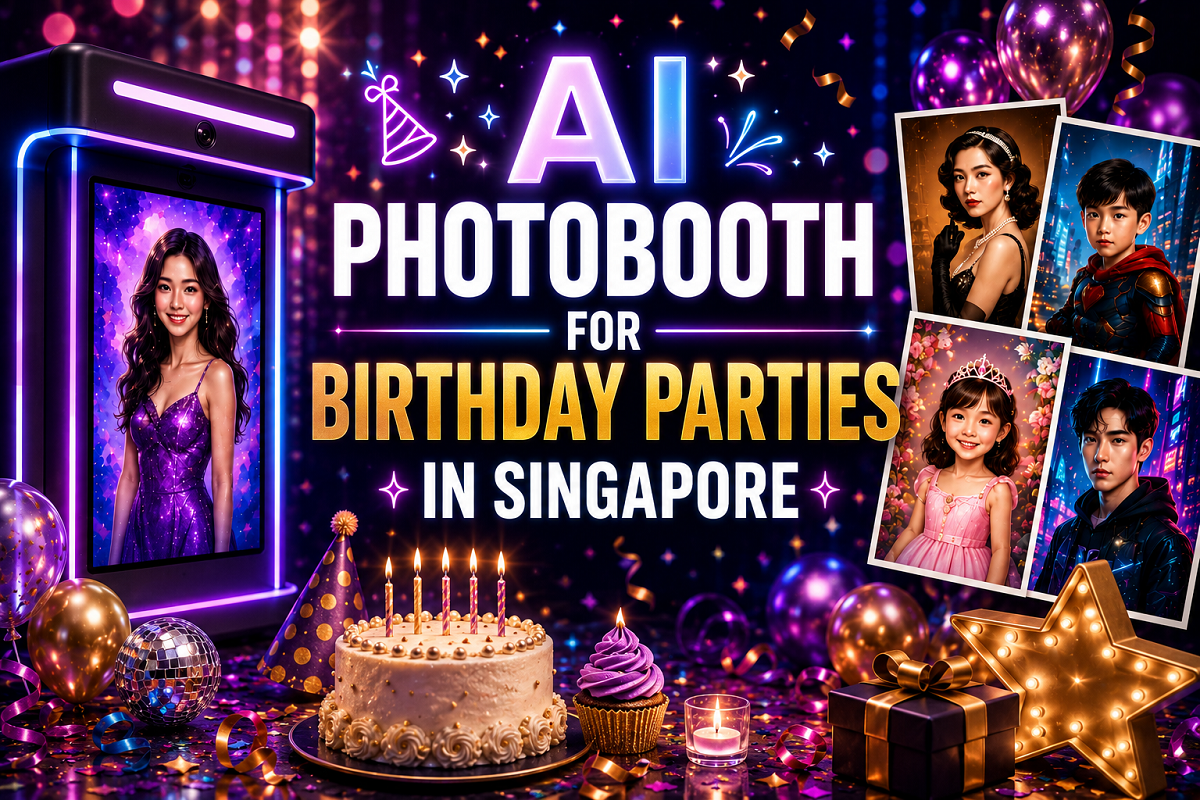
AI Photobooth for Birthday Parties in Singapore: Fun, Creative and Instantly Shareable
Looking for the perfect entertainment experience for a birthday party in Singapore? An AI photobooth is one of the most…


A successful AI photobooth setup is not only about having advanced AI technology or beautiful portrait styles. In real events, the overall guest experience often depends on smaller practical details that many people overlook at the beginning of the planning process.
Lighting, internet stability, booth placement, guest movement, and surrounding branding can all affect how smoothly the experience works during the event itself. Even the best AI system may struggle if the setup environment is poorly planned.
This is why experienced event organizers in Singapore usually pay close attention to the setup process long before the event starts. Whether it is a wedding, corporate launch, networking session, exhibition, or private celebration, a proper AI photobooth setup helps the event feel more polished, organized, and professional from the guest’s perspective.
For many guests, the photobooth becomes one of the most interactive parts of the event. If the setup feels smooth and visually attractive, people naturally spend more time engaging with it, taking photos, sharing content online, and interacting with other guests throughout the reception.

Many people focus heavily on the AI-generated portraits themselves, but setup quality plays a huge role in how guests experience the booth during the event.
A good AI photobooth setup usually feels effortless from the outside. Guests can approach the booth comfortably, take photos quickly, receive their portraits smoothly, and move naturally without creating congestion around the activation area.
When setup planning is poor, the opposite often happens. Long queues start forming, guests become confused about where to stand, lighting becomes inconsistent, and the overall experience begins to feel disorganized.
This matters even more at corporate events and weddings because the photobooth is often positioned in visible social areas where guests gather frequently. A messy setup can affect the atmosphere of the event more than organizers expect.
A properly planned setup also helps AI-generated portraits look better. Lighting consistency, camera positioning, and background arrangement all influence how accurately the AI processes images during live events.
For event planners, this is one reason why booth setup should never be treated as an afterthought.
One of the first things organizers should think about is booth location.
An AI photobooth does not necessarily require a massive space, but it does need enough room for comfortable movement, proper lighting placement, and guest interaction.
For weddings, the booth is often placed near reception areas or beside cocktail spaces where guests naturally gather before dinner begins. In corporate events, photobooths usually work better near networking areas rather than hidden corners of the venue.
The goal is to place the booth somewhere visible and accessible without disrupting overall guest flow.
Crowded spaces can create problems quickly. If guests constantly block walking paths or stand too close to dining tables, the experience starts feeling inconvenient instead of enjoyable.
At larger events, organizers should also think about queue management. Some AI photobooth activations become surprisingly popular during peak hours, especially after dinner or during networking sessions. Having a little extra space around the booth helps avoid unnecessary congestion.
Different venue types also require different setup approaches.
Hotel ballrooms, rooftop venues, exhibition halls, wedding gardens, and outdoor event spaces all have different lighting conditions and movement patterns. Experienced vendors usually adjust the booth layout based on the environment instead of using the exact same setup everywhere.

Lighting is probably one of the most underestimated parts of an AI photobooth setup.
Many people assume the AI system can automatically fix poor lighting conditions, but image quality still depends heavily on how well guests are lit during photo capture.
Overly dark venues often create inconsistent portrait results. Strong yellow lighting can also affect skin tones and overall rendering quality. Harsh spotlights sometimes create shadows that make AI-generated portraits look less natural than expected.
Soft and balanced lighting usually produces the best results.
For indoor weddings and corporate events, vendors often use controlled lighting setups that help maintain consistent portrait quality throughout the event. Outdoor setups may require additional adjustments depending on whether the event takes place during daytime or evening hours.
Night events can be especially challenging because venue lighting changes constantly during live entertainment, stage performances, or dinner segments.
This is why experienced AI photobooth vendors normally test lighting conditions before the event begins instead of relying entirely on automatic camera settings.
In many cases, good lighting can improve portrait quality far more than expensive booth decorations.
Most AI photobooth systems rely on stable internet and reliable power support to operate smoothly during live events.
Internet speed affects how quickly AI portraits can be processed and delivered to guests. While some systems can operate partially offline, stable connectivity usually helps the overall experience feel much faster and more seamless.
Unfortunately, not every venue offers strong WiFi performance.
Large ballrooms, exhibition halls, and crowded event venues sometimes experience unstable connections during peak event hours because hundreds of guests are using the same network at once.
This is one reason why professional vendors often test internet conditions before setup begins. Some teams even prepare backup mobile networks or alternative systems in case the venue connection becomes unstable during the event.
Power access also matters more than many organizers expect.
A clean setup usually requires nearby power sources to avoid long visible cables running across guest areas. Poor cable management not only looks messy but can also create safety concerns in crowded environments.
Experienced AI booth installation teams normally plan these technical details carefully so the setup looks clean and professional throughout the event.

Guest flow is one of the biggest differences between a smooth event activation and a stressful one.
At many events, the AI photobooth becomes busiest during specific periods rather than evenly throughout the day. Weddings often see large crowds after dinner, while corporate networking events usually peak during social interaction periods.
This means booth positioning should support natural movement rather than create bottlenecks.
If the booth is placed too close to entrances, buffet lines, or main walkways, guests can accidentally create congestion without realizing it. On the other hand, booths hidden too far away from activity areas may receive less engagement than expected.
The best setups usually allow guests to approach the booth comfortably, wait naturally, and move away easily after receiving their portraits.
Group portraits also require more space than many people expect. Friends, colleagues, and families often take photos together, especially during weddings and corporate dinners. Having enough room around the booth makes these interactions feel much more comfortable.
For larger events, some vendors also guide guests through the process directly to keep the experience moving efficiently.
Small operational details like these often make the event feel far more organized overall.
For corporate events especially, the AI photobooth is not just entertainment. It also becomes part of the event branding experience.
A well-designed branding area helps the booth feel integrated into the overall event rather than looking like a separate random installation.
Simple details such as backdrop design, logo placement, event colors, hashtags, and digital overlays can significantly improve how professional the setup feels visually.
Many companies in Singapore now use AI photobooths during product launches, networking events, exhibitions, and brand activations because guests naturally interact with the content and share it online afterward.
This creates organic social media exposure while keeping the experience interactive.
The branding itself does not need to feel aggressive. In fact, cleaner and more minimal branding often feels more premium during modern events.
Wedding events also benefit from this approach. Instead of corporate logos, couples often use personalized overlays, monograms, wedding hashtags, or custom AI portrait styles that match the overall theme of the celebration.
These details help guests feel that the booth experience is connected to the event itself rather than feeling generic.
One common mistake is placing the booth in areas with poor lighting conditions. Even advanced AI systems struggle when lighting becomes inconsistent throughout the event.
Another issue is underestimating queue space. At busy events, guests naturally gather around interactive experiences. Without enough surrounding space, the booth area can quickly feel crowded and uncomfortable.
Some organizers also rely entirely on venue WiFi without testing the connection beforehand. This can create delays in image processing or digital delivery during peak event hours.
Overcomplicated backdrop designs can also become a problem. While customization is important, extremely busy visuals sometimes make AI portraits look less clean and professional.
Sound placement matters too. Booths positioned directly beside speakers or live entertainment stages often create communication difficulties between staff and guests during photo sessions.
Many of these problems are avoidable with proper planning before the event day.
Experienced vendors usually begin planning long before the actual setup day arrives.
Many conduct venue checks beforehand to understand lighting conditions, internet reliability, guest flow, and power access. This helps reduce unexpected problems during live events.
Professional teams also prepare backup systems whenever possible. Spare equipment, secondary internet options, and on-site troubleshooting support help events continue running smoothly even if technical issues appear.
Setup timing is another important factor. Most experienced vendors arrive early enough to fully test the booth before guests begin arriving.
During the event itself, on-site support teams often help guide guests, monitor processing speed, and solve small operational issues quickly before they affect the overall experience.
These details may not always be visible to guests directly, but they play a huge role in making the event feel smooth and professionally managed.

One of the most common questions event organizers ask is how much space an AI photobooth actually needs. In most cases, moderate space is enough as long as there is room for lighting, guest movement, and small queues during busy periods.
Another common concern is internet requirements. While some AI systems can operate partially offline, stable internet usually improves processing speed and digital delivery during live events.
Outdoor setups are also possible, although weather protection and lighting adjustments may be necessary depending on the venue.
Lighting quality remains one of the most important setup factors. Soft and balanced lighting generally produces the most consistent AI portrait results.
Setup timing varies depending on the event size, but most professional teams prefer arriving early enough to complete testing before guests enter the venue.
A successful AI photobooth setup is not only about technology. The overall experience depends on how well the setup fits the event environment, guest flow, and atmosphere throughout the day.
Lighting, space planning, internet stability, branding, and booth positioning all play an important role in creating a smooth and interactive guest experience. When these details are handled properly, the AI photobooth feels naturally integrated into the event rather than looking like a separate installation placed in the corner of the venue.
This is one reason why many event organizers in Singapore now pay more attention to setup quality instead of focusing only on the AI portraits themselves. A clean and well-planned setup often makes the entire event feel more polished, modern, and professionally organized.
Many couples and corporate planners also review recent event setups and AI portrait examples before choosing a vendor, especially for weddings, networking sessions, product launches, and private celebrations where guest interaction matters.
If you are planning an upcoming event in Singapore, explore more AI photobooth setups, event experiences, and portfolio examples at Photoshoot Singapore.
👉 https://photoshootsingapore.com/
WhatsApp: (+65)94844344
Call: (+65)92719166